


Custom Brochure Printing: Complete Guide from Design to Delivery
Custom brochures are one of the most powerful marketing tools for businesses that want to present their services professionally and build trust. From corporate profiles to product catalogs, a well-designed and well-printed brochure can directly influence buying decisions.
This complete guide explains custom brochure printing from design to final delivery, helping you avoid mistakes and achieve high-quality results.
Understand the Purpose of Your Brochure
Before starting the design, clearly define why you need the brochure.
Common brochure purposes include:
- Company profile presentation
- Product or service promotion
- Event or exhibition marketing
- Sales support material
A clear objective helps shape the design, content, and layout effectively.
Choose the Right Brochure Type
Different brochure formats serve different needs.
Popular brochure types:
- Bi-fold brochures (simple and clean)
- Tri-fold brochures (structured information)
- Z-fold brochures (step-by-step content)
- Multi-page booklets (detailed presentations)
Choosing the correct format improves readability and user engagement.
Plan Content Structure Carefully
A brochure should be easy to scan and understand.
Best content structure:
- Strong headline
- Short introduction
- Clear sections with headings
- Bullet points for features or benefits
- Strong call-to-action
Avoid overcrowding text — clarity always performs better.
Focus on Professional Design
Design quality directly impacts brand perception.
Key design best practices:
- Use brand colors consistently
- Maintain white space
- Align text and visuals properly
- Avoid using too many fonts
A clean and professional design builds credibility instantly.
Use High-Resolution Images and Graphics
Low-quality images ruin print results.
Always ensure:
- Images are 300 DPI
- No pixelation or stretching
- Colors are suitable for print (CMYK)
High-quality visuals make brochures look premium and trustworthy.
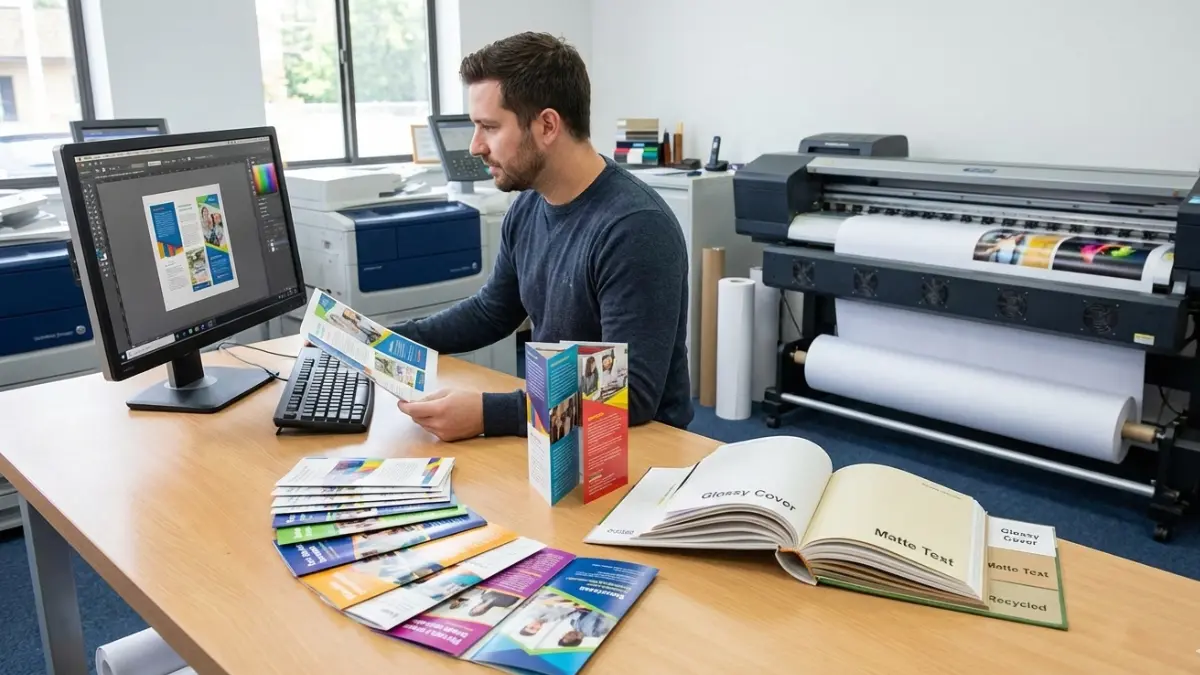
Select the Right Paper Stock
Paper choice affects both look and feel.
Common paper options:
- Glossy paper for vibrant designs
- Matte paper for elegant and professional feel
- Thick paper for premium brochures
Paper thickness and finish should match your brand image.
Choose the Best Printing Finish
Finishing adds value and impact.
Popular finishing options:
- Matte or gloss lamination
- Spot UV for highlights
- Foil stamping for luxury feel
- Folding and trimming accuracy
The right finish enhances durability and visual appeal.
Check Print-Ready File Requirements
Before printing, ensure your files are print-ready.
Important checks:
- Correct bleed and trim marks
- CMYK color mode
- Proper margins
- Fonts outlined or embedded
Print-ready files prevent delays and reprints.
Request a Proof Before Bulk Printing
Never skip the proofing stage.
A print proof helps you:
- Verify colors
- Check text alignment
- Confirm folds and margins
Proof approval ensures the final batch meets expectations.
Decide Quantity and Delivery Timeline
Printing quantity affects pricing and turnaround time.
Best practices:
- Print according to distribution plan
- Avoid overprinting
- Ask for delivery timelines in advance
Urgent marketing often requires fast or same-day printing services.
Coordinate Delivery and Distribution
Once printed, plan how brochures will be used.
Distribution methods:
- Office reception
- Sales meetings
- Events and exhibitions
- Door-to-door campaigns
Proper handling ensures brochures reach customers in perfect condition.
Final Thoughts on Custom Brochure Printing
Custom brochure printing is not just about printing — it’s about strategic communication. When design, paper, printing, and delivery are aligned, brochures become a strong sales and branding asset.
Investing in professional brochure printing delivers long-term marketing value.
Frequently Asked Questions (FAQs)
What is the best brochure type for businesses
Tri-fold and bi-fold brochures are the most commonly used and versatile formats.
Should brochures be glossy or matte
Glossy suits colorful designs, while matte gives a premium and professional look.
How many brochures should I print
Print based on your distribution plan; start with a manageable quantity to avoid waste.
Why is CMYK important for brochure printing
CMYK ensures accurate color reproduction in print compared to RGB.
Is proofing really necessary
Yes, proofing prevents costly mistakes and ensures print accuracy.
Can brochures be printed urgently
Yes, many professional printers offer fast or same-day brochure printing options.